
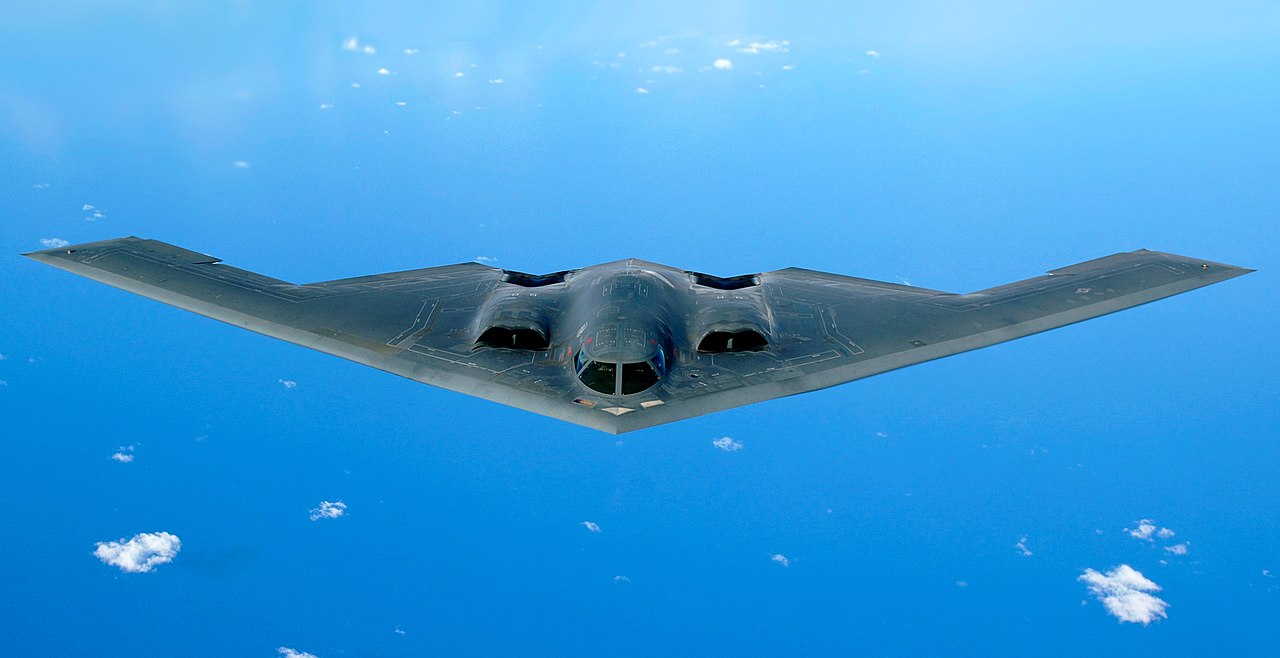
Northrop Grumman reported $9.9 billion in Q1 2026 revenue and $6.14 EPS as the company's two highest-profile DoD programs accelerate through the year. The B-21 Raider bomber production is expanding 25%, and the Sentinel intercontinental ballistic missile restructure is on track to finalize by end of 2026. Coverage from Air & Space Forces Magazine, Air & Space Forces (Sentinel milestones), and Defense One.
The B-21 expansion
Congress appropriated $4.5 billion for "expansion of production capacity" for the B-21 in a reconciliation package. Northrop finalized a deal with the Air Force to increase annual production capacity by 25%, supported by approximately $2.5 billion in company-funded investments phased over 2027-2029.
The shutdown deal that ended the Fall 2025 impasse added $850M for B-21 and Sentinel construction projects — meaningful for facilities, less for subcontractor workflow.
The Sentinel reality check
Sentinel is on a different trajectory. The Air Force requested $3.7B for Sentinel in the FY2026 budget; Congress added $2.5B in reconciliation for "risk reduction activities." But Northrop is not expecting to start production anytime soon — the company expects Sentinel to remain in development for several years, with the transition to production not arriving until later in the decade.
Key program milestones:
- Program restructuring finalizes end of 2026
- First test launch of the ICBM: 2027
- Initial Operational Capability: early 2030s
Subcontractor implications
- B-21 ramp: Accelerating demand for composite structures, electronics, propulsion components, LO coatings. Suppliers with existing B-21 qualification gain the most.
- Sentinel risk-reduction: Test-and-evaluation contracts, specialty engineering services, and ground systems development — less production-line work, more technical services.
- FAS critique context: Sentinel's total life-cycle cost has been described as a $200B program by critics. Cost pressure likely means more competitive subcontract sourcing over time.